Ben Fogle's Terrifying 'Near Death' Encounter: A Wake-Up Call for Rural Safety
In a chilling turn of events, beloved television presenter and adventurer Ben Fogle has recounted a harrowing ben fogle near death experience that occurred not in the wilds of Everest or the depths of the Atlantic, but on a seemingly idyllic dog walk just outside his family home. This brush with mortality has ignited a passionate campaign from Fogle, demanding immediate action to implement 20mph speed limits in villages where roads double as pavements, protecting residents from the perils of dangerously high national speed limits.
Fogle, known for his daring expeditions and resilience in extreme environments, recently shared how a van, travelling at a perfectly legal but inherently dangerous 60mph, careered around a blind bend and skidded to a halt mere feet from him and his dog. "My life flashed before my eyes," he revealed, drawing a stark parallel between this mundane village encounter and the life-threatening moments he's faced on global adventures. The irony, as Fogle powerfully articulates, is that he nearly lost his life not while scaling a perilous peak or battling an ocean storm, but in the heart of his picturesque community near Henley in Oxfordshire.
This incident wasn't just a personal shock; it was a potent demonstration of a widespread problem plaguing countless rural communities across the UK. Ben Fogle's experience highlights the urgent need for a re-evaluation of road safety policies in areas where the traditional distinction between road and pedestrian space has blurred, or never existed at all.
The Peril of "Pavement-Free" Villages: Why 60mph is a Death Trap
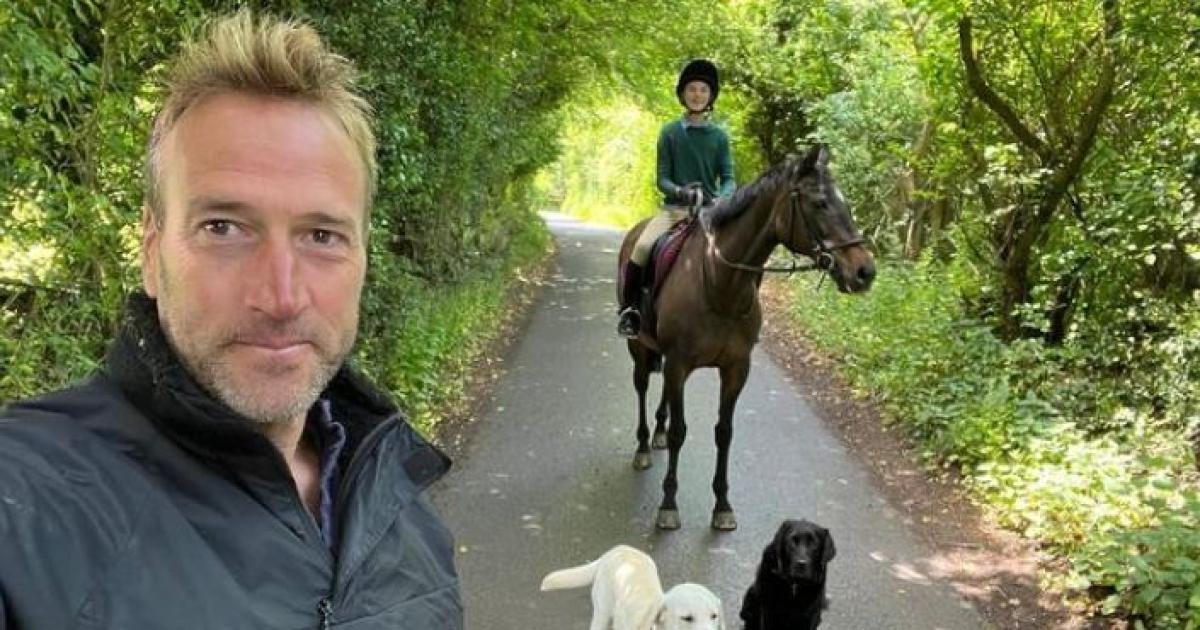
The core of Ben Fogle's argument lies in the unique characteristics of many rural villages. His home, a quintessential "happy little village," is a place where a single-track road serves as the primary thoroughfare for everything and everyone. "We have no pavements," Fogle explained, "which means the road is our pavement, footpath and bridleway." This shared space is frequented by cyclists, dogs, walkers, children, horses, tractors, cars, and delivery drivers. Yet, unbelievably, this vital artery through the community is subject to the national speed limit of 60mph.
Imagine the scene: a child on a bike, a horse and rider, or a family enjoying a walk with their dog, all sharing the same narrow strip of asphalt with vehicles potentially travelling at motorway speeds. The potential for tragedy is not just theoretical; it's a constant, terrifying reality. Fogle's own children have had multiple "near encounters" with speeding traffic, underscoring the daily anxiety faced by residents. This isn't just about one celebrity's complaint; it's a vocalisation of the fear and frustration experienced by thousands in similar rural settings.
The danger is compounded by features common to rural roads: blind bends, limited visibility, and the absence of any dedicated safe space for pedestrians. While the 60mph limit might be legally permissible on some rural roads, its application within the confines of a bustling village, particularly one without pavements, represents a fundamental mismatch between legislation and lived reality. It's a system designed for open country, not for the delicate ecosystem of a community where every foot of road is a shared resource. Fogle's passionate plea resonates with many who recognise rural road threat in their own localities.
Understanding the "Pavement Paradox"
- Shared Space, Unequal Risk: Pedestrians, cyclists, and equestrians are inherently more vulnerable than vehicle occupants.
- Visibility Challenges: Rural roads often feature sharp turns, hedges, and limited sightlines, making high speeds incredibly dangerous.
- Community Hubs: Unlike open stretches, village roads are points of congregation, interaction, and active travel, not just transit.
- Psychological Impact: Living with constant fear of an accident affects community well-being and discourages active travel.
Advocating for Change: The Urgent Need for 20mph Limits
Ben Fogle is now a vocal advocate for common-sense road safety, specifically pushing for a 20mph speed limit in villages like his. His argument is compelling: if 20mph limits have been successfully implemented in urban areas, often *with* pavements, then surely they are even more critical in communities where the road itself is the only safe passage for non-vehicular traffic. "I am a risk taker," he stated, "so I don't say this lightly. Someone is going to get killed in our village."
The effectiveness of 20mph zones is well-documented. Studies consistently show that reducing vehicle speeds significantly decreases the severity of injuries in the event of a collision. A pedestrian hit at 40mph has a 90% chance of dying; at 20mph, this drops to 10%. This isn't just about preventing fatalities but also reducing serious injuries, fostering a safer environment for children to play, encouraging walking and cycling, and ultimately improving the overall quality of life within a community. It's about prioritising human life and well-being over a few seconds saved on a journey.
Fogle highlights the frustration that local councils often face when trying to implement such changes, mentioning that his own local councillor "has tried to no avail." This underscores the systemic challenges in adapting national regulations to local needs. The call is not just for his village but for "countless other small villages out there who also live with 60mph speed limits through the heart of their community."
The Benefits of Slower Speeds:
- Reduced Fatalities and Injuries: Lower speeds dramatically improve survival rates in collisions.
- Increased Reaction Time: Drivers have more time to react to unexpected hazards.
- Shorter Stopping Distances: Vehicles can stop much more quickly, preventing accidents.
- Enhanced Community Cohesion: Safer roads encourage people to walk, cycle, and interact, strengthening local bonds.
- Quieter and Cleaner Environments: Reduced traffic speed often leads to less noise and air pollution.
Beyond the Headlines: Practical Steps for Community Road Safety
Ben Fogle's powerful story serves as a catalyst, but systemic change requires collective effort. For communities facing similar dangers, there are actionable steps that can be taken to advocate for safer roads:
- Gather Evidence: Document near misses, accidents, and incidents. Encourage residents to report every close call to build a compelling case. Photographic or video evidence can be particularly impactful.
- Form a Local Action Group: A unified voice is more powerful. Establish a village road safety group to coordinate efforts, share information, and strategise.
- Lobby Local Authorities: Engage with your Parish, Town, and County Councillors. Present your evidence, highlight the specific dangers, and propose concrete solutions like 20mph limits, speed cameras, or traffic calming measures. Persistent, respectful communication is key.
- Raise Public Awareness: Use local media, social media, and community events to inform residents and gather support. The more people understand the risks and solutions, the stronger your movement will be.
- Community Speed Watch: If available in your area, participate in a Community Speed Watch program. This involves trained volunteers monitoring speeds with radar guns and reporting persistent offenders to the police, raising awareness and deterring speeding.
- Consultation and Design: Advocate for community-led design solutions. Sometimes, physical changes like narrowed roads, chicanes, or even effective signage can complement speed limits to create a safer environment.
Ben Fogle's traumatic experience is a stark reminder that danger doesn't only lurk in remote, exotic locations. Sometimes, the greatest risks are found right on our doorsteps, hidden in plain sight within the very fabric of our communities. His call to action is not just for his village, but for every "idyllic" rural setting grappling with the deadly paradox of 60mph roads and no pavements. It's a plea for common sense, for human life, and for the simple right to walk safely in one's own home.